
Honoring the Legacy of Ven. Polwatte Pagnananda:
A Builder of Unity Across Cultures
Written by: Irangani Herath Mudiyanselage & Shanika Weerasundara

Senior Theravāda monks lead by Devananda Thero, and the current abbot Punnasiri Thero, bear the casket of Venerable Pagnananda during the final procession in honor of a revered teacher.
Photos by: Courtesy of Sarana International Buddhist Center, Gayani Perera
Buddhist communities across the Pacific Northwest are reflecting on the life and legacy of Most Venerable Polwatte Pagnananda Nayaka Thero, longtime abbot and founder of Sarana International Buddhist Center (SIBC) in Tukwila, Washington. He passed away March 27, 2026, at age 73.
Venerable Polwatte Pagnananda’s passing marks the end of a remarkable chapter in Northwest Buddhist history. For decades he quietly built something rare: a thriving Theravada Buddhist community that brought together Cambodian, Sri Lankan, and Western practitioners under one roof, while preserving the traditions and spiritual heritage of each.
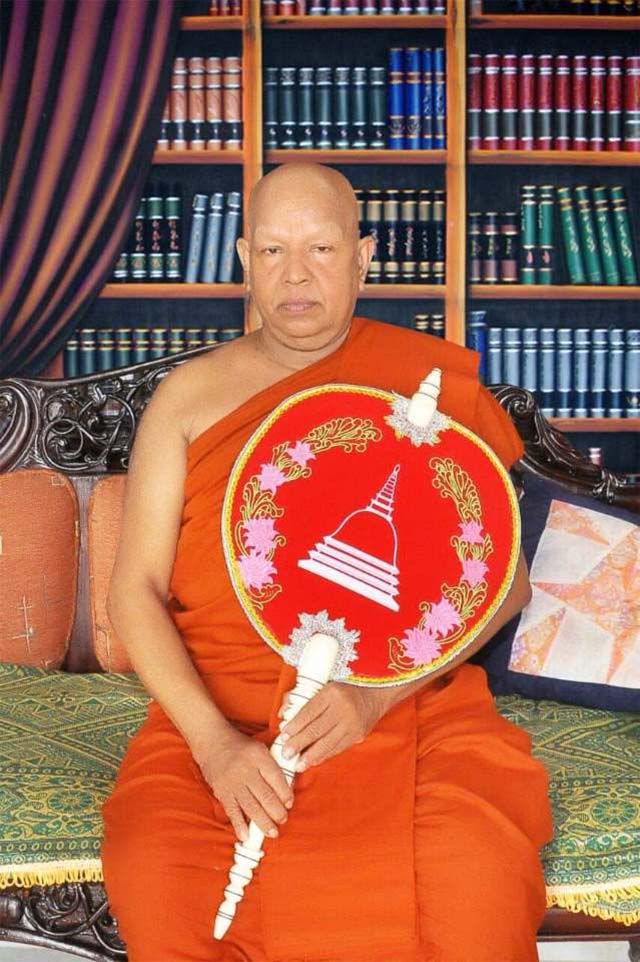
For many Northwest Buddhists, Venerable Pagnananda’s greatest legacy may be the example he set. He demonstrated that the Buddha’s teachings can unite people across cultures, languages, and national identities. He showed that preserving tradition and embracing diversity are not opposing goals, but complementary expressions of the dhamma.
Hundreds gathered on April 26, 2026, for Venerable Pagnananda’s memorial and cremation ceremonies at Sarana International Buddhist Center, and walked in a final procession. During these ceremonies, monastics, community leaders, elected officials, and lay followers, came together to pay tribute to a beloved spiritual leader.
The formal memorial and cremation procession and last rites were led by Thalangama Devananda Thero, who is founder of the Indiana Buddhist Temple, and abbot of Lankarama Buddhist Temple in California.
The ceremony was attended by the leading monastics of Sri Lankan Theravada tradition across the United States. These included:
– Pallebage Chandrasiri Nayaka Thero (founder and abbot of Oregon Buddhist Vihara);
– Madawala Seelawimala Thero (spiritual director and founder of the American Buddhist Seminary Temple in Sacramento);
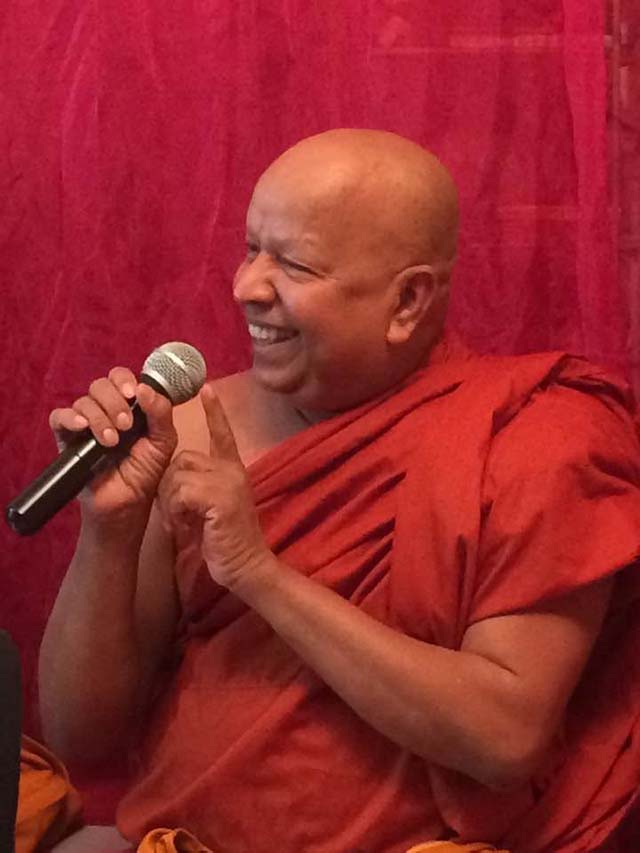
– Walpola Piyananda Nayaka Thero (head abbot of Dharma Vijaya Buddhist Vihara in Los Angeles);
– Siyambalagoda Ananda Thero (founder of Arizona Buddhist Vihara);
– Aparakke Punnasiri (resident abbot and a primary teacher at the Maithree Vihara Meditation Center, Sun Valley, California);
– Bogolle Sumana Thero (abbot, Sri Rathana International Viharaya, Anaheim, California);
– Thawalama Punnajee (abbot, Dallas-Fort Worth Buddhist Center (aka Texas Buddhist Meditation Center);
– Paarambe Siriniwasa Thero (founder, New York Buddhist Vihara).
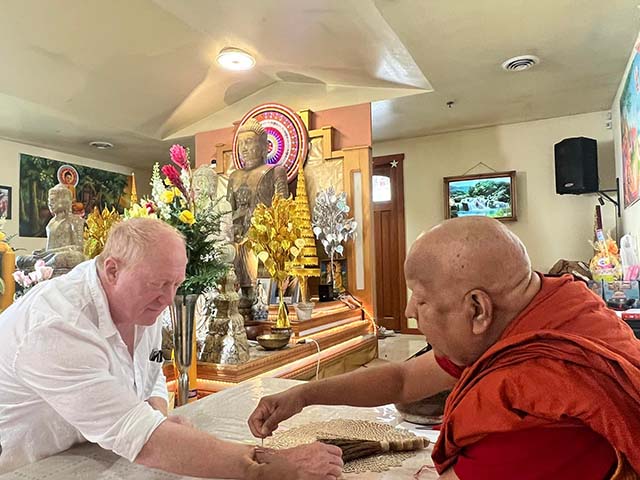
Notable dignitaries attending included the Cambodian consul general to Washington state, the mayor of Tukwila, members of the Tukwila City Council, and leaders of the business communities Ven. Pagnananda served. The funeral featured traditional Theravada Buddhist last rites, which included monk-led services with Pali chants, candles, and symbolic offerings to honor his memory, and to reflect on the impermanence of life.
Born in Sri Lanka in 1953, Venerable Pagnananda was ordained in 1974 in the Theravada Buddhist tradition, and received his monastic training in the classical Sri Lankan lineage. He earned a bachelor of arts degree from the University of Kelaniya, Sri Lanka. He passed the first examination for the Pracina Panditha degree, which is awarded by the Oriental Studies Society of Sri Lanka, and which confers mastery of Pali, Sanskrit, and Buddhist studies.
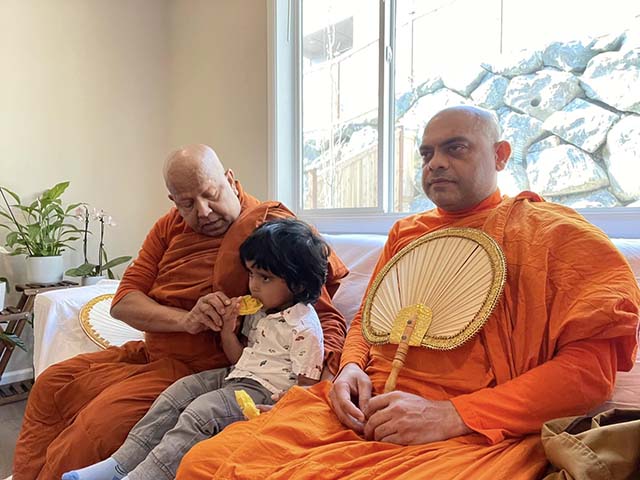
In 1996, Venerable Pagnananda was invited to the United States as part of the dhammaduta movement, dedicated to sharing the Buddha’s teachings and serving communities around the world. In 1998 he established the Sarana International Buddhist Center in Tukwila, a city just south of Seattle, with the support of the South Seattle Cambodian community.
Before arriving in Seattle, Venerable Pagnananda led spiritual practices at the Milleniya Sri Devarakshita Ramaya Temple, and the Wawala Isipathanaramaya Temple, both located in Horana, Sri Lanka. Later he was appointed sanghanayake (Buddhist leader), for the Northwest.
When he settled in the Pacific Northwest, he brought with him more than monastic robes and religious training. He brought a living tradition that Sri Lanka has carefully preserved for more than two millennia.
Unlike many Buddhist communities in North America that remain separated by ethnicity, Sarana evolved into a shared spiritual home for Sri Lankan Buddhists, Cambodian Buddhists, some Thai Buddhists, and an increasing number of Western practitioners. Families worshiped together, celebrated Vesak and Kathina Buddhist holidays together, and supported the sangha together. They worked side by side to build community, where the dhamma could flourish for future generations.
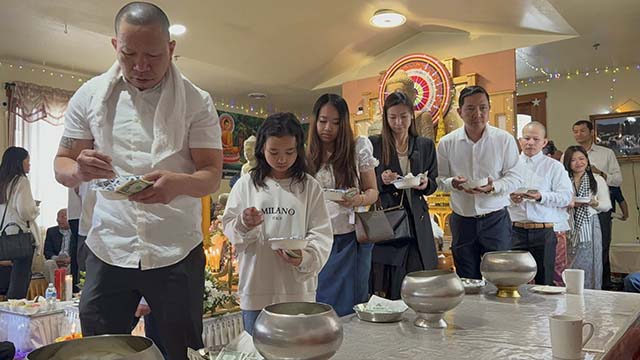
Perhaps the most remarkable aspect of his accomplishment was transforming Sarana International Buddhist Center into a spiritual and cultural home, shared by multiple communities rooted in the Buddha’s teachings. Today the temple is a place where traditional ceremonies like dana, meditation, chanting, Vesak celebrations, kathina ceremonies, dhamma education, and support for the monastic community, all remain vibrant parts of community life.
The temple can be seen below Seattle’s Sound Transit southbound light rail, which runs on elevated tracks adjacent to the temple, just before the trains arrive at the Tukwila station, one stop before Seattle-Tacoma International Airport.
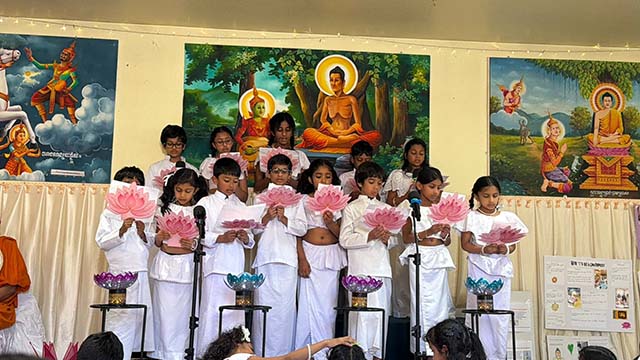
Another important part of Venerable Pagnananda’s legacy is the temple’s commitment to future generations. Thus one of the temple’s most valued programs is its Sunday dhamma school.
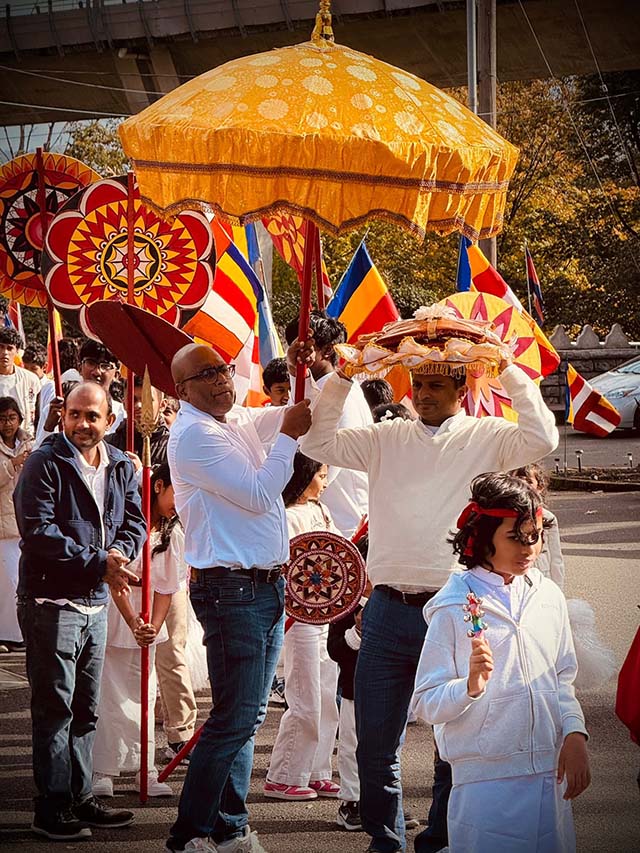
This program teaches young people Buddhist ethics, meditation, cultural traditions, and community values. Through classroom instruction, religious observances, and community service activities, young people learn about Buddhism, and also about the importance of discipline, and the responsibilities of compassionate citizenship.
Under Venerable Pagnananda’s leadership, the temple expanded significantly. New facilities, including a community gathering hall and outdoor meditation spaces, helped accommodate a growing congregation and an expanding range of programs. These developments reflected his understanding that a temple should serve not only as a place of worship, but also as a place where families can celebrate, learn, volunteer, and support one another.
Today the temple consists of five Theravada monks: four monks of Sri Lankan origin, and one monk of Cambodian origin. Languages used include Sri Lankan Sinhala and Cambodian, and also English when visiting monks join the sangha.
Today Sarana International Buddhist Center remains the only Sri Lankan Theravada Buddhist temple in the Seattle metropolitan area, while the Cambodian Buddhist community now supports Wat Khemarak Pothiram in South Seattle, and Wat Sanghikaram in North Seattle. The Sarana resident monks often collaborate with the nearby Cambodian temples, and also often collaborate with Sri Lankan temples elsewhere in the U.S.
Abbot Narangamuwe Punnasiri Thero has taken over leadership of the Sarana International Buddhist Center, following the passing of Venerable Pagnananda. Ven Punnasiri Thero was educated in Kesbawe Piriwena, Sri Lanka, has been closely associated with Venerable Pannananda, and has been a member of the temple sangha since 2021. Punnasiri Thero is committed to continuing the temple’s mission of serving Cambodian, Sri Lankan, and broader Buddhist communities, throughout the Pacific Northwest.
The Cambodian Buddhist community offered enormous leadership in creating Sarana International Buddhist Center as a monastery led by monks ordained in Sri Lankan tradition. This followed the devastation of the 1975 to 1979 Khmer Rouge era, when most of Cambodian society, including the monastic community, was forcibly ripped apart by the communist regime’s attempts to create a collective agrarian society.
Cambodian families arrived in Washington as refugees, with their own Buddhist leadership largely decimated. Under these conditions Sri Lankan monastics helped rebuild Cambodian Buddhism in America, an effort that was about restoring community, identity, language, memory and hope.
A particularly important contribution came from Ms. Khim Horn Chheng, who in 2000 donated the down payment for the Sarana International Buddhist Center property in Tukwila.
It was in this context that Venerable Pagnananda’s role became especially meaningful. Carrying a monastic lineage that Sri Lanka had preserved for more than two millennia, he offered the Cambodian community not only spiritual leadership, but also friendship, stability and continuity.
Malon Mao, a member of Cambodian community who had been a monk in Cambodia, became a close collaborator between the lay Cambodian community and the Sarana International Buddhist Center monastics. Mao said he immensely misses Venerable Pannananda and his close association, adding that he appreciated Ven Pannananda’s tireless work ethic, and his continual efforts to develop the temple.
Samaranayaka, a member of the Sri Lankan community, said Venerable Pannananda was able to envision a place that included everyone, and then achieve it by perseverance, often selflessly sacrificing his own physical comfort.
Venerable Pannananda may be gone, but the spirit of generosity, harmony, service, and cross-cultural understanding that he cultivated, remains deeply woven into the Buddhist landscape of the Pacific Northwest.
May Most Venerable Polwatte Pagnananda Nayaka Thero attain the supreme peace of Nibbāna!
If you appreciate our work, consider a donation.
Irangani Herath Mudiyanselage has been a dhamma school teacher at the Sarana International Buddhist Center in Tukwila for over 14 years. Originally from Sri Lanka, she previously enjoyed a distinguished career as an engineer for world-class manufacturing firms. She now resides in Kirkland, Washington, where she shares her expertise as a mathematics and science teacher at Brightmont Academy.
Shanika Weerasundara is a Seattle-based corporate attorney, and an active supporter of the Pacific Northwest Buddhist community. Originally from Sri Lanka, she lives in Kirkland. She writes on culture, community leadership, and the enduring relevance of the dhamma in contemporary society.