
Passaddhi Vihara Raising Funds for Property
Written by: Suvijjānā Bhikkhunī, Niyyānika Bhikkhunī, Sianita Natalia, and Amber Siefer

Suvijjānā Bhikkhunī and Niyyānika Bhikkhunī at Soul Healing Center in Olympia.
Photos by: Passaddhi Vihara, Cittanandā Bhikkhunī, Kate Hathirat, Alexandra Haynes, Doug O’Dell, Wanida Tucker
This year the Passaddhi Vihara Support Foundation began a fundraising campaign, to purchase a property for Passaddhi Vihara in the Pacific Northwest.
The vision is to create a bhikkhuni monastery that offers refuge from the pressures of modern life, supports full-time monastic practice, and provides a sanctuary for the wider community. The property will foster peacefulness, loving-kindness, wisdom, and the conditions for realization and awakening.
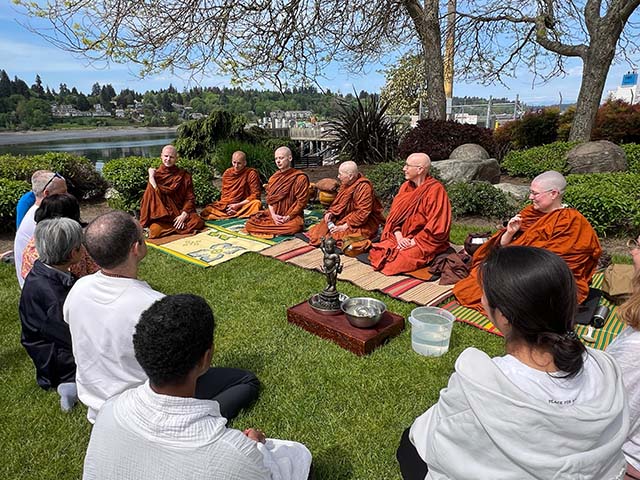
As the Theravāda bhikkhunī sangha continues to grow in the Pacific Northwest, there is increasing need not only for qualified teachers and preceptors, but also for a stable monastic environment where training, practice, and community life can flourish over the long term. Bhikkhunis are generally defined as female monastics, compared to bhikkhus, who are generally male.
“At present, there is not yet an established Theravāda bhikkhunī monastery in the Pacific Northwest with a permanent monastic property,” said Sianita Natalia, a lay person who serves as Passaddhi Vihara’s treasurer. “Supporting Passaddhi Vihara’s efforts helps create the conditions for a lasting residence, where Theravāda bhikkhunis can live, practice, train, and serve the wider community for generations to come.”
Currently two bhikkhunis – Suvijjānā Bhikkhunī and Niyyānika Bhikkhunī – reside, practice and teach at Passaddhi Vihara, which is currently housed in a rented Olympia apartment. These co-founders stated that a key reason for the planned property purchase is to better create supportive conditions for monastic development.
“Passaddhi Vihara’s foremost aim is to support development toward awakening for its current and future monastics. We focus on deep understanding of the dhamma and commitment to the path,” Niyyānikā Bhikkhunī said. “From that basis, at the pace of practice we will gradually build and grow a community of monastics, lay renunciants, and lay practitioners seeking sanctuary and refuge. Our aspiration is that the entire process of developing the monastery remains aligned with the path, and becomes a ground for awakening.”
The bhikkhunis plan to establish a monastery where monastics can dedicate themselves fully to the dhamma through practice, study, and community life. This requires secluded spaces for meditation, as well as shared areas where monastics can receive meal offerings and teach the dhamma.
Another aim is to create a place where lay practitioners can participate in meditation, reflection, and dhamma programs during scheduled hours. The monastery will serve as a sanctuary for quiet practice, with respect for the natural environment while also preserving the simplicity of monastic life. With clearly defined public and private areas, including a detached meditation hall, the property will support both monastic training and community practice.
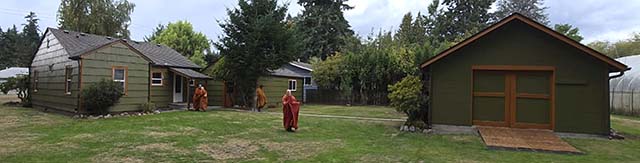
If enough support is gathered, Passaddhi Vihara hopes to begin searching for a suitable property in spring 2027, possibly on the outskirts of Olympia. At present the community is focused on fundraising, sharing the vision, and cultivating local involvement.
Passaddhi Vihara opened in 2024 as a monastic residence, for the purpose of supporting practice based on the Buddha’s teachings that leads to liberation, peace, and the ending of suffering.
Current Stage of Development
Co-founder Suvijjānā Bhikkhunī, the senior resident bhikkhuni, said Passaddhi Vihara is offering new activities, while continuing others.
This April we started offering in-person programs at the Soul Healing Center of Olympia. We offer weekly guided meditation and teachings based on early Buddhist texts. It brings us joy to have this personal connection with the local community, and some people are beginning to attend regularly.
We also have offered in-person teachings at dharma centers in Portland. This direct connection is an important step in building the local support needed for the future monastery. We also continue to connect with people throughout the country and internationally through regular online programs. Both local and broader connections will help support the growth of the monastery.
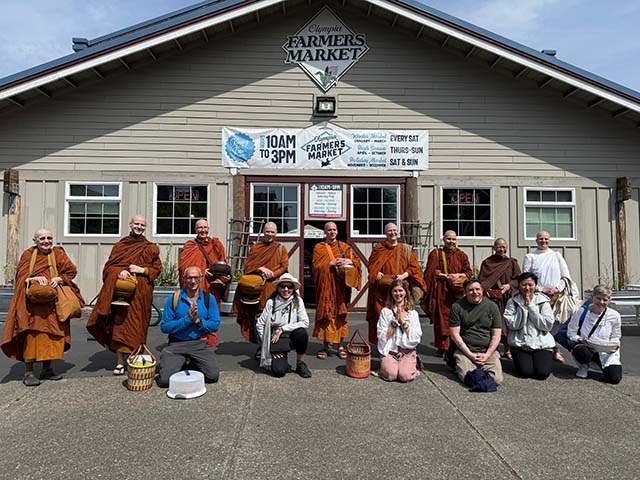
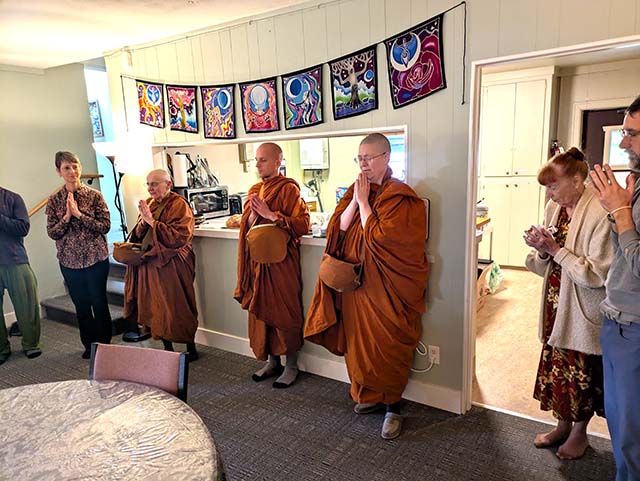
Another avenue for fostering connection is our twice-weekly alms rounds. We meet friends and strangers who ask questions, while some offer food for the meal. Monastics from Parayana Vihara and Clear Mountain Monastery have joined us, and on those occasions we share a picnic in the park.
Through these activities we are cultivating the community foundation, needed for our monastery vision to actualize.
Need for a Bhikkhunī Monastery
The word bhikkhunī generally refers to a fully ordained female monastic or alms mendicant. Bhikkhu is the male equivalent. In Passaddhi Vihara’s case, one monastic identifies as female, and one as non-binary.
Theravāda is a school of Buddhism that focuses on the teaching and practices found within the early Buddhist texts of the Paḷī Canon. Both Passaddhi Vihara monastics ordained and practice based on the Paḷī Canon.
Requests for bhikkhunīs to establish monasteries in the Pacific Northwest began more than a decade ago. For many years there have been Theravāda bhikkhu monasteries founded by Thai, Cambodian, Sri Lankan and Vietnamese bhikkhus, but none for bhikkhunis.
In recent years two bhikkhunī communities have begun forming in Western Washington: Parayana Vihara in Port Townsend, and Passaddhi Vihara in Olympia. Both are currently in rented spaces. Along with the new and vibrant bhikkhu-led Clear Mountain Monastery, the bhikkhunīs are weaving into the existing Theravada landscape, and building layers of welcome, mutual supportiveness, and a sense of monastic family.
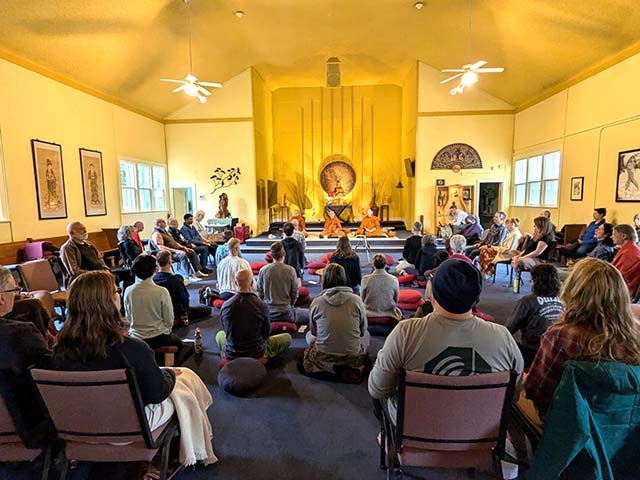
“As a lay practitioner, my connection to the Buddha’s teachings has grown gradually and simply through showing up, listening, volunteering, and practicing in community,” said Amber Siefer, an Olympia resident and volunteer. “Volunteering with Passaddhi Vihara and attending events has deepened my appreciation for how the dhamma is sustained through acts of service, care, and shared intention.
“It has also made clear how important it is to have a dedicated place for practice,” she said. “The opportunity to support and practice with bhikkhunīs feels especially meaningful because they represent a living continuation of the Buddha’s decision to fully ordain women — a lineage that has not always been accessible or supported. Establishing a permanent monastery to ensure this legacy can take root and grow in the Pacific Northwest, is an incredible privilege.”
Addressing the Challenges
Currently there are only a small number of Theravāda bhikkhunīs in North America. However, an increasing number are receiving ordination and early training in Asia, under the guidance of senior bhikkhunīs connected to monasteries there.
The bhikkhunī monasteries in Asia provide important forms of support: experienced teachers, international networks, stable bases of support, ordination peers, and long-term care for monastics throughout all stages of life. They can support practitioners from postulancy through ordination, training, illness, aging, and death.
Although North Americans can ordain and train abroad, there is growing recognition of the need for local monasteries that can serve as places of refuge and training locally, while participating in the wider international network of bhikkhunī communities. Passaddhi Vihara aspires to become one such monastery.
“In conversations with women on the Theravāda monastic path, I’ve heard about the challenges of finding places to train in the Pacific Northwest,” said Natalia. “Many aspiring practitioners must travel outside the region — and sometimes internationally — to find monasteries able to accept additional trainees.”
These conversations have underscored the need for a stable and established bhikkhunī monastery that can support ordained monastics, as well as those entering the training path.
Vision and Fundraising
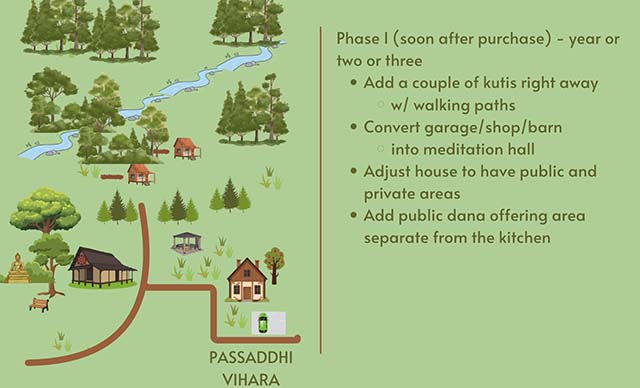
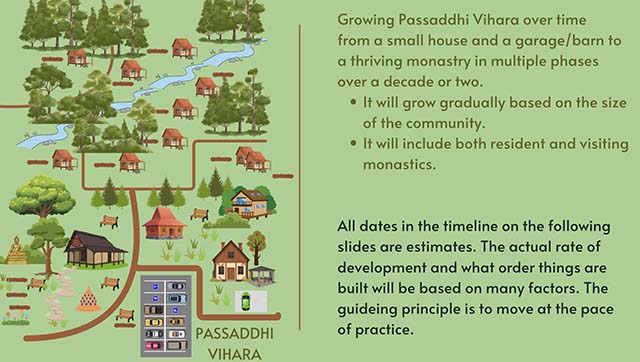
Passaddhi Vihara has created a vision board to offer an overview of the long-term plan for the monastery. The vision will continue to evolve depending on the property that is eventually purchased, and the needs of the growing community. More vision information can be found on the Passaddhi Vihara website.
“The property fund has raised $30,000 as of this spring, including $15,000 in matching funds,” said Natalia, Passaddhi Vihara Support Foundation treasurer. “This growing support helps sustain the vision of Passaddhi Vihara: establishing a peaceful place for monastic training, meditation, study, and seclusion, while also creating a welcoming sanctuary where laypeople can gather for practice, reflection, and dhamma programs.
“If you feel inspired to participate in this shared vision,” she added, “Offerings of any amount are deeply appreciated.”
If you appreciate our work, consider a donation.
Ayyā Suvijjānā Bhikkhunī began practicing meditation in 1976. Her Theravada monastic training started in 2006, and she has been a bhikkhunī since 2010.
Ayya Niyyānika Bhikkhunī has been a bhikkhuni since December 2017. They started monastic training in 2014.
Sianita Natalia is a practitioner living in Seattle, who serves as treasurer for the Passaddhi Vihara Support Foundation.
Amber Siefer lives in Olympia and attends in-person programs of Passaddhi Vihara, and also volunteers.