
Transforming Transgression:
Portland Shambhala Surviving the Shambhacalypse
Written by: Ben Martens, Carol Liberman, David Parker, John Smith and Nancy Smith
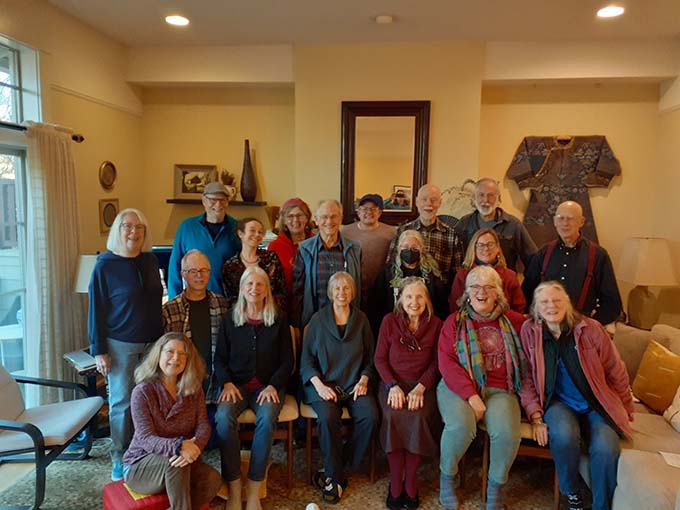
Portland sangha members, who have been in deep dialogue about the Shambhala issues, at a community meeting in early 2025.
Photos by: Bruno Linares, Ben Martens, Abbey Pleviak , Robert Del Tredici
When Northwest Dharma News asked for the story of how (and why) our Portland Shambhala sangha has weathered the scandals of previous years, we obliged. After all, what could we say that would be more damaging than the bad press that’s only a short Google search away for any curious reader? While there’s been a lot of ink spilled on the issues at the top of the organization, there hasn’t been a lot of focus on the impacts for individual Shambhala centers around the world.
Our local sangha was deeply shaken by the events of 2018, now known colloquially in our community as the Shambhacalypse. We have done a lot of work to repair as a community, to move forward, and to continue to center the dharma in our work as a sangha. Putting this article together with our leadership team has been truly painful – after all, who wants to revisit a time of intense betrayal, uncertainty, and stress? In some ways, both locally and globally, Shambhala is still adapting to the changes we’ve made since 2018. We’re proud to be here, but it’s been a difficult road, paved with painful questions:
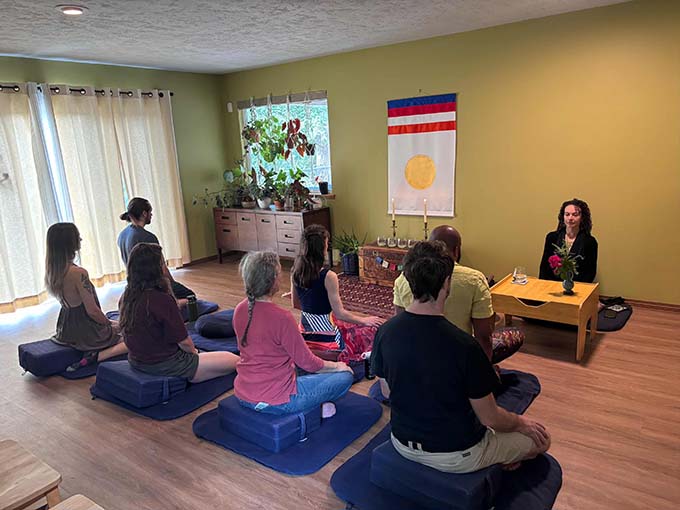
What do we do when our spiritual leaders reveal themselves as all-too human? How does an organization move forward after allegations of abuse have surfaced? Is it worth working to restore a tainted institution? Shambhala isn’t the first Buddhist organization to have transgressive teachers, not to mention similar issues in Christianity and Hinduism, and we won’t be the last. We think that some of the lessons we’ve learned, and the changes we’ve made, can serve as a helpful model for all spiritual organizations in a similar situation.
But first, context.
The Shambhacalypse
In 2018, the Sunshine Report was released, setting off a slow-motion explosion in Shambhala, then one of the largest Buddhist communities in the Western world. The report alleged multiple incidents of sexual abuse within Shambhala perpetrated by persons in authority, along with cover ups or the silencing of victims. A subsequent report alleged incidents of inappropriate sexual behavior by Sakyong Mipham, Shambhala’s lineage holder and leader.
Turmoil roiled through the sangha. Senior teachers, including Pema Chödron, called for change and/or resigned their positions. Leaders and meditation instructors who had participated in abuse, or helped cover it up, were stripped of position and privilege. In June of 2018, after being the face of the global Shambhala organization for nearly 30 years, the Sakyong issued a formal apology to the community and announced that he was stepping back for a period of reflection.
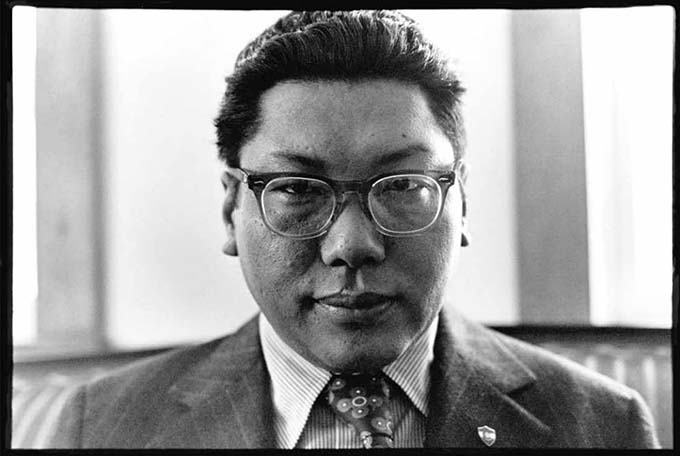
The difficulties were exacerbated by the facts that Shambhala founder Chögyam Trungpa, and the regent after him, both committed sexual abuses from their respective positions of power.
In Portland, and many sectors of the wider sangha, the revelations about the Sakyong and other trusted leaders were deeply disturbing. It was as if our favorite uncles had been molesting our sisters, brothers, cousins – and that mom knew, and chose to look away. And then we learned there had been inappropriate behavior by visiting teachers toward some of our own members. Many of us experienced a sense of moral injury and outrage.
Portland’s robust community ranged from new practitioners to senior members with deep ties to Shambhala going back to the era of Trungpa. Some of our senior practitioners had taken vows with the Sakyong, and were very involved with the complex organizational ties at Shambhala, while others simply treated the center as a welcoming space for mindfulness and community.
We were founded in 1982, and had experienced waves of growth and contraction, but always enjoyed a steady and healthy core membership. Our cohort included many members of the LGBT+ community, an active Young Meditators group, Buddhists and non-Buddhists. We had been leasing a wonderful space for more than 20 years that was well established in the broader meditation community of the city, and we were in the midst of fundraising to purchase a new building.
Immediately upon release of the report, a fair share of our members and friends in the community quit outright. A series of community meetings began, aimed at allowing members to share their feelings and consider “Where to go from here”. Many of us had experienced Portland Shambhala as a place of real community, personal discovery, and spiritual growth. The process of reckoning with these dark undercurrents was gut-wrenching – and it revealed deep rifts in our community. Attitudes ran the gamut: from those disgusted by institutional corruption, the Sakyong’s behavior, and Shambhala’s enabling of abuses, to those who felt that abandoning the Sakyong was tantamount to forsaking our spiritual roots as a community.
In the end, some senior members of Portland Shambhala took a step back from leadership in the sangha, choosing to honor their vows and continue to study with the Sakyong. Others chose to honor their vows by remaining stewards of the Shambhala tradition, and to follow the organization’s next steps without the Sakyong. Still others left altogether.
As if this internal strife were not enough, we suddenly found ourselves in the middle of the COVID-19 pandemic. Over a span of a few years, our membership dropped by half. Our extensive fundraising efforts toward buying a building were abandoned. In 2020 we made the difficult decision to give up our rented home of 20 years, and since then we have stayed connecting through a patchwork of online spaces, public parks, community rentals, donated spaces, and in the homes of our members.
Next Steps
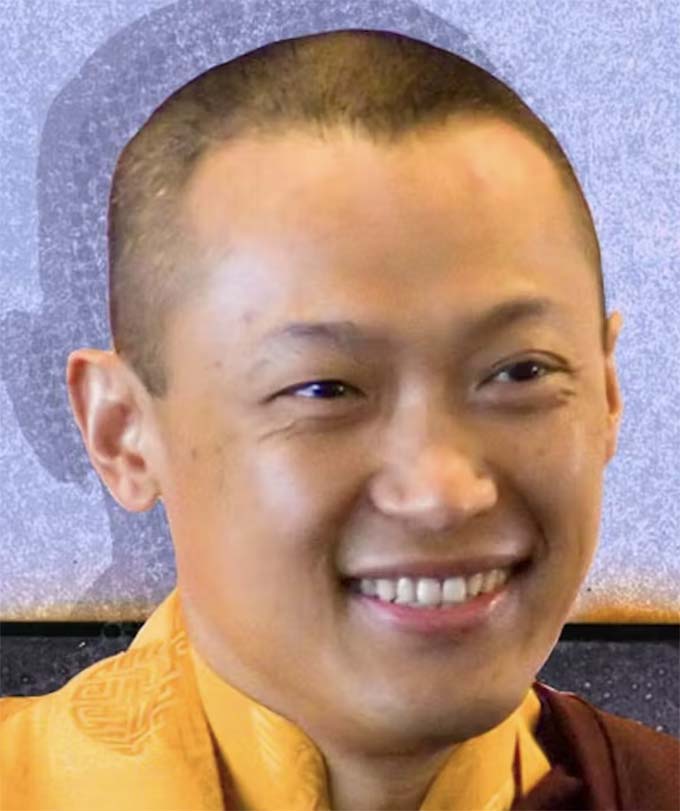
In early 2022, the international Shambhala board formally announced that the Sakyong would have no legal authority over Shambhala’s governance. In a dramatic shift from traditional Asian Buddhist traditions, we no longer have a single lineage holder at the spiritual heart of our organization. If you’re familiar with the lineage structure of Vajrayana Buddhist practice, you understand why this is a really big deal! Shambhala is now governed by a community board.
As part of the new board’s mission of rebuilding community trust and creating a culture of safety, Shambhala implemented new policies and procedures, including:
- A new code of ethics that sets clear standards of conduct for teachers, leaders, and members. Separate policies explicitly cover child protection, sexual misconduct, conduct for people in authority, and diversity, equity and inclusion. The intent is for those in leadership or with access to vulnerable people to be held to specific additional standards.
- Systems for confidential reporting of misconduct, aiming to prevent silencing or retaliation.
- Requiring leaders and teachers throughout Shambhala to undergo training in ethics, boundaries, and trauma‑informed practices using Dr. Cedar Barstow’s Right Use of Power program. These principles are now routinely incorporated in leadership training.
- Efforts to acknowledge harm, and to provide space for survivor voices.
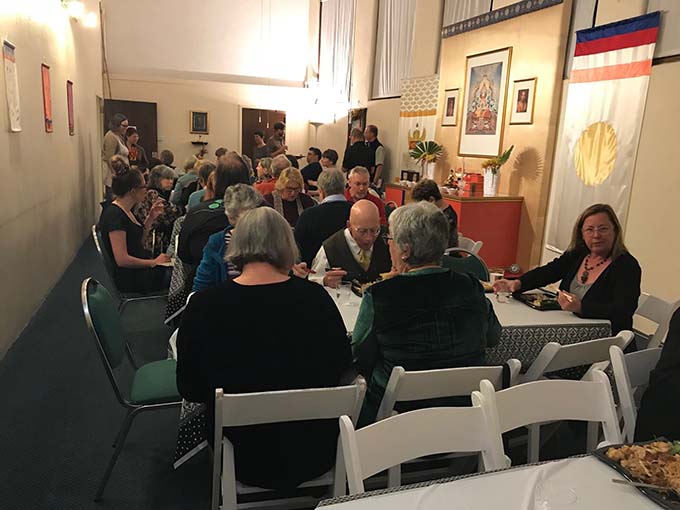
While there has been a lot of criticism of Shambhala, we feel that these efforts to transform our community and acknowledge harm speak to the goodness at the heart of the organization. We are now modeling a new, community-led structure for a Buddhist organization, one that doesn’t foreground a single, charismatic leader. We think this is a novel and welcome challenge for our 21st century society.
We also continue to stand on the firm foundations that established Shambhala. Foremost is the extensive body of teachings articulated by Chögyam Trungpa, who distilled the essence of Tibetan Buddhist wisdom and offered it to the West in a way both accessible and universally relevant—whether one’s path is spiritual or secular. The Shambhala Teachings offer a roadmap for those in the West to connect to our basic goodness, not just for personal awakening, but in the pursuit of an enlightened society for all.
Here in Portland, we continue to do our best to shift the social environment so that kindness, clarity, and courage are the cultural norm.
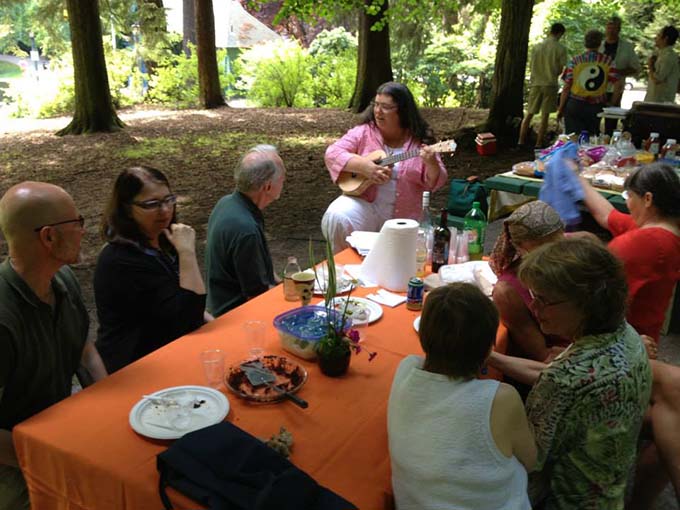
We’re currently working to strengthen our circle of meditation instructors, with regular support and skill-building gatherings. All of these trainings include education on consent, safety, and protection of vulnerable students.
Our younger sangha members host weekly in-person meditation gatherings which emphasize community connection. In line with Shambhala’s new processes and procedures, we remain committed to preventing abuse by ensuring students and teachers maintain healthy boundaries, connect in safe spaces, and feel supported in their studies.
This year, we hosted mindful hikes in nature, an arts retreat, ikebana meetups, seasonal gatherings, a lecture on Beat poetry, and meetups to discuss our online Shambhala studies in-person.
We won’t ever have the ability to heal all the divisions in our larger Shambhala community. But what we can do is continue to provide a safe, supportive, loving environment for dharma students and spiritual seekers to awaken to their basic goodness.
Ben Martens studied music and performing arts at Naropa University from 2011-2015. He has maintained a vigorous arts and mindfulness practice informed by the teachings of Trungpa and the Naropa community since then. He enjoys electronic music, contact improv dance, creative writing, and taking his daughter on long hikes.
Carol Liberman is finance director for Shambhala Portland. She has practiced in the Shambhala lineage (Tibetan: Nyingma/Kagu) for 20 years, and has held multiple roles within the Portland Shambhala sangha. She currently studies with Anam Thubten of the Nyingma lineage, as well as with many Shambhala teachers.
David Parker has been active for 30 years in the Portland Shambhala Center as a meditation instructor and teacher, among other roles. He facilitates a discussion group on the challengers and opportunities of growing old called Aging in Enlightened Society. Before he retired, he was a scientist and professor at Oregon Health & Science University. Recently, he has become a climate activist working with Third Act Oregon.
John Smith serves as Portland Shambhala Center director. Smith has been a student in Shambhala since 1975, and has played many different roles in the Boulder, Colorado and Portland (since 1999) centers, from sweeping floors to teaching. He is fluent in Spanish and English, having grown up in Puerto Rico. He likes jazz, technology, and tries to bicycle to the gym regularly.
Nancy Smith began studying with Chogyam Trungpa, Rinpoche in 1981, in Los Angeles. She has continued her Buddhist and Shambhala studies since then, with teachers such as Mingyur Rinpoche and Her Eminence Khandro Rinpoche. She is grateful for the life lessons and support they have and do continue to give her.