
Clear Mountain Finds 90 Acres for Planned Monastery
Written by: Steve Wilhelm
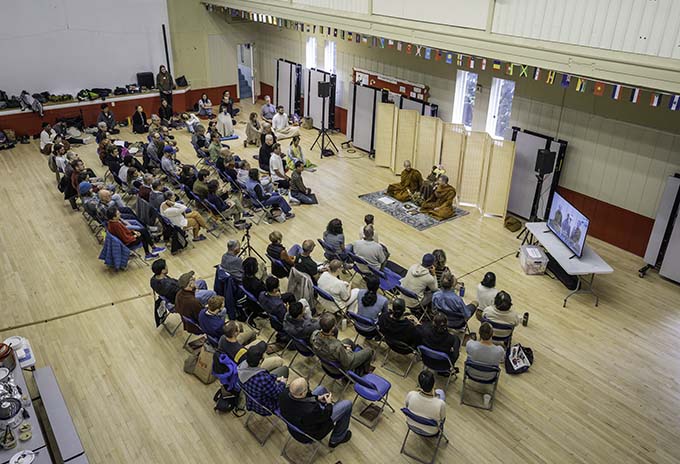
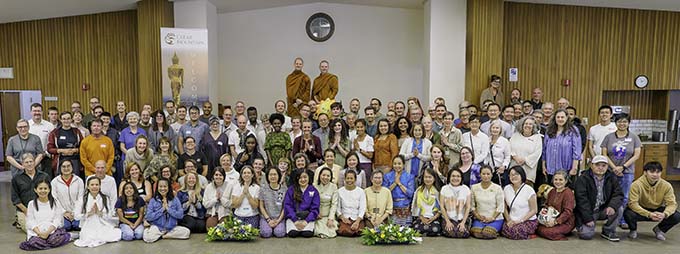
Saturday morning gatherings have steadily grown, at the St. Mark’s Cathedral Skinner auditorium. Often more than 70 people attend, from around the region and online.
Photos by: Chia-Yung Wu
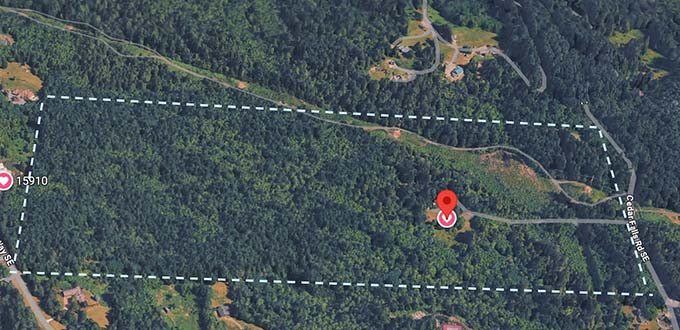
After three years of searching for a monastery site, the Clear Mountain Monastery community has contracted to buy nearly 90 acres of forested land, just 32 miles east of downtown Seattle.
Now the supporting lay community has three months, until the end of March, to offer about $380,000 in donations, the remaining 8 percent of the land price of about $4.93 million. This was the current balance as of the issue going live in the first week of January. The 88 percent of the total so far offered, is an accumulation of generosity over the last four years. Any donations are welcomed here, where donation progress can be viewed.
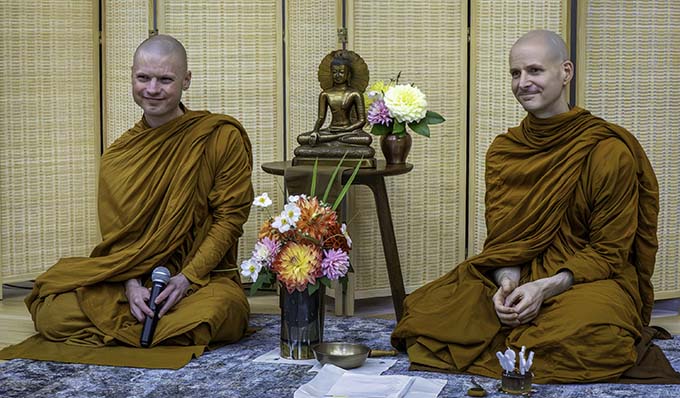
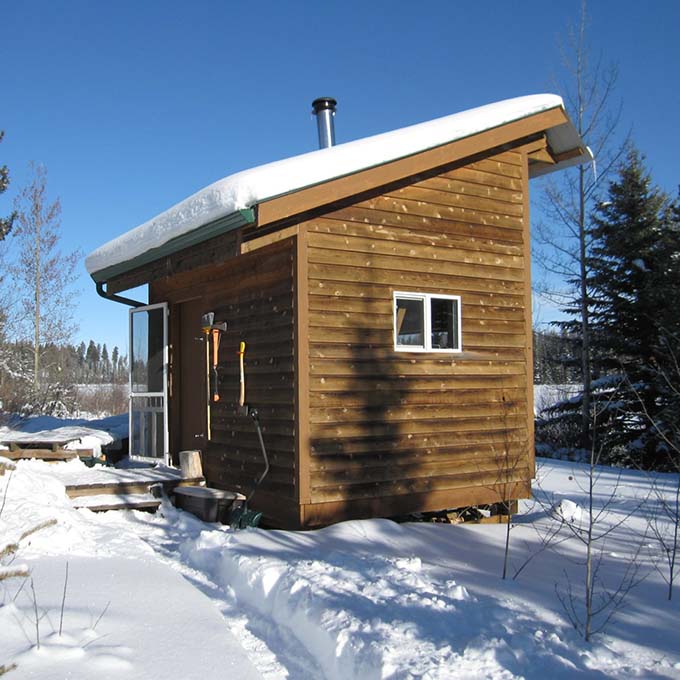
The founding monks’ vision is that the future monastery will offer small huts called kutis for upwards of 15 monks, plus a large meditation hall and other facilities for visiting lay people.
A key component of the land search has been to find a site within 40 minutes of downtown Seattle, so that non-monastics will be able to go there for morning food offerings, or morning and evening meditations, chanting sessions and teachings.
“Most forest monasteries in North America are at least two hours from large population centers, making them primarily accessible to those who are retired or motivated enough to drive hours during their off days,” said Ajahn Nisabho, one of the co-founding monks. “Clear Mountain’s proximity to Seattle will give a much wider demographic — the young, working, and less well-off –the ability to come visit, meditate, find community, and hear teachings on a weekly or even daily basis.”
The monastery project was launched in the summer of 2021 by Ajahn Nisabho, a bhikkhu (monk) in Thai forest tradition. Nisabho, who grew up in Spokane but who trained as a monastic in Thailand and Australia, was gradually joined by Ajahn Kovilo, a bhikkhu in the same tradition who was born in Charlottesville, Virginia.
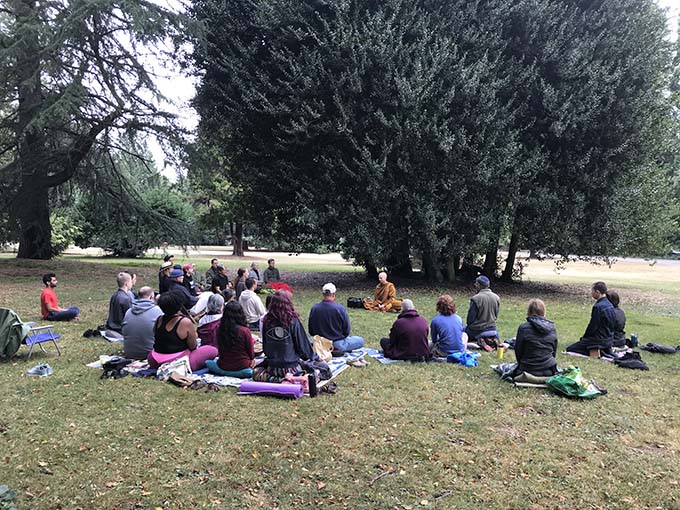
While in the beginning Clear Mountain Monastery consisted of Ajahn Nisabho teaching a handful of people outdoors in the grass of Seattle’s Volunteer Park, the numbers and support have swiftly grown. Now the weekly in-person Seattle gatherings attract upwards of 90 people, while Clear Mountain has at the same time developed a vibrant online presence, attracting people from around the world.
Both bhikkhus live according to the very exacting rules, called the vinaya, of Buddhist monastic tradition going back to the time of the Buddha 2,600 years ago. This means that the two Seattle bhikkhus only eat before noon, and only food that is offered as alms. In addition they never handle money, can’t ask for anything except for water, and can’t keep food overnight.
These boundaries traditionally create an unique interdependence between monastics and the lay community in Buddhist countries such as Thailand, Burma or Sri Lanka. While the monastics depend on lay people to offer the core “requisites” of food, robes, shelter and medicine, the lay people in turn depend on the monastics to uphold ethical standards, to develop spiritually, and to share the dharma.
The 90-acre site will be well-suited for this balance, because it’s just a 1.2 mile walk from the South Fork Restaurant, where people will be able to come to offer alms food outside. People also will also be able to call in takeout orders for the monks from the restaurant.
The monks’ vision for the monastery is broad, as an oasis of inner peace, nature and quiet, where people will be able to find sanctuary from conflict-filled lives.
“Each morning, the monastery will be open for anyone who wishes to come ask questions of the monks, perhaps receive a brief teaching, offer food, and share a meal with other practitioners,” Nisabho said. “The hall, library, and grounds will be open for the morning for practice as well. In the afternoon, there may be opportunities for a “tea time” Q&A with a monk, and evening “puja” – chanting and meditation.
“Each weekend and on Buddhist holy days, a large morning gathering would feature a formal dhamma teaching, Q&A, and meditation, and the monastery would plan to host regular non-residential meditation retreats. It would regularly host visiting bhikkhu and bhikkhuni teachers. Additionally, the monastery would offer a space of peace, refuge, and practice for those who needed it – where they could work in a garden, walk quiet forest trails, or meditate in the forest.”
Community generosity has been central to development of the Clear Mountain community to this point, and will continue to be central to the final acquisition of the land.
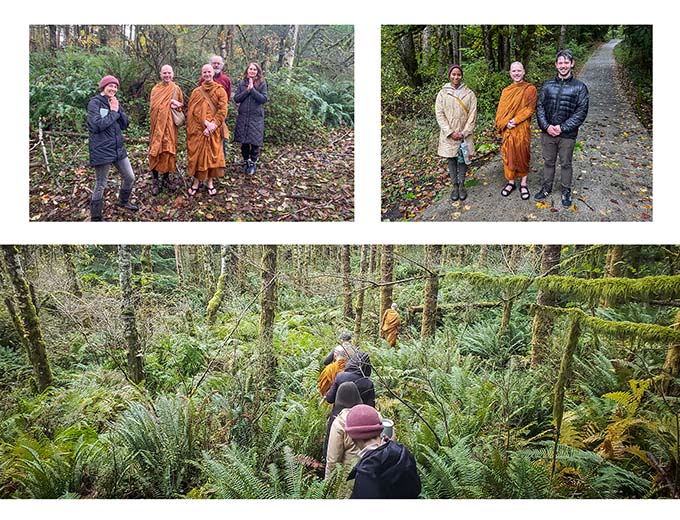
Since Ajahn Nisabho arrived in 2021 he has lived in complete dependence on the generosity of lay supporters, as has Ajahn Kovilo since he arrived in Seattle full time. At 7 a.m. nearly every morning during the week, one or both of the monks travel by bus or ferry to Seattle’s Pike Place Market. They bring their alms bowls, and people then offer the monks food for the one daily meal, which will sustain them for the rest of the day.
Another very important manifestation of generosity has been consistent support from Seattle’s St. Mark’s Cathedral, on Capitol Hill, which has provided a rent-free place for the community to gather and practice, in the church-owned Skinner Auditorium. In appreciation the Clear Mountain community has made numerous financial and other offerings to the cathedral, and the two have collaborated on several joint religious offerings.
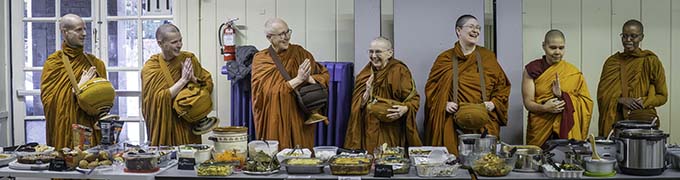
Absolutely central to the Clear Mountain Monastery vision is complete support of equality of women, and in particular support of full ordination of women. While the male monastic hierarchy in some Asian cultures still resists full ordination of women, ajahns Kovilo and Nisabho have been completely consistent in their support.
Results have included constant communication and exchange among the bhikkhunis (females) and bhikkhus (males) in the Northwest, including periods of teaching, lots of discussion amongst the monastics, and the bhikkhunis and bhikkhus showing up and respecting each other’s ceremonies.
A particular example was the Nov. 21 lineage change of Bhikkhuni Ven. Silananda in Port Townsend, Washington, which was supported by the requisite five female monastics and five male monastics.
“For approximately 1,000 years, the Theravāda bhikkhuni order of ordained women which the Buddha founded was lost to the world; decimated by famine and war,” said Ajahn Nisabho. “Only in the last few decades has that been reestablished, and taken its first steps toward flourishing.
“Clear Mountain’s monks attend bhikkhuni ordinations, and actively support their sisters in robes, consulting them as advisors, inviting them regularly as teachers, and strengthening deep bonds of friendship through regular visits to and from the bhikkhunis at Parayana Vihara, Passaddhi Vihara, Karuna Buddhist Vihara, and elsewhere. Such a flourishing community is extremely rare, and precious, in the modern world.”
People are welcome to attend Clear Mountain’s weekly 9:30 a.m. Saturday gatherings at St. Mark’s, either in person or online.
Also everyone is welcome to join the 6 p.m. Wednesday online gatherings, during which the monastics often interview renowned spiritual leaders and Buddhist monastics from around the world, and also offer teachings themselves.
While closing the funding gap to the required $4.93 million may seem harrowing, the monks are confident that donors in all forms, according to means, will step up to bring the monastery to life, to serve people for decades to come.
“As the monastery begins to grow, those who wish might help create the garden, clear dead wood from the forest, build monks’ huts, or simply, but essentially, offer food to the resident monastics,” said Ajahn Nisabho. ” Of course, they may also donate funds to building the monastery as well. Most importantly, people can offer their practice – working sincerely to cleanse the heart of greed, hatred, and delusion, and bring the heart to a pure selflessness.”
Steve Wilhelm serves as editor of Northwest Dharma News. A working journalist before his 2016 retirement, he now focuses on dharma practice and teaching. He serves on the boards of Friends of Clear Mountain Monastery and Tibetan Nuns Project. He primarily teaches with Seattle Insight Meditation and Eastside Insight Meditation. He has edited seven dharma books. Wilhelm and his wife Ellen live near Cottage Lake, slightly east of Woodinville, Washington, with the enigmatic cat Aerazele, and the dauntless chihuahua Annie.