
A Special Kind of Courage:
The Bodhisattva Warrior Spirit in Perilous Times
Written by: Joel and Michelle Levey
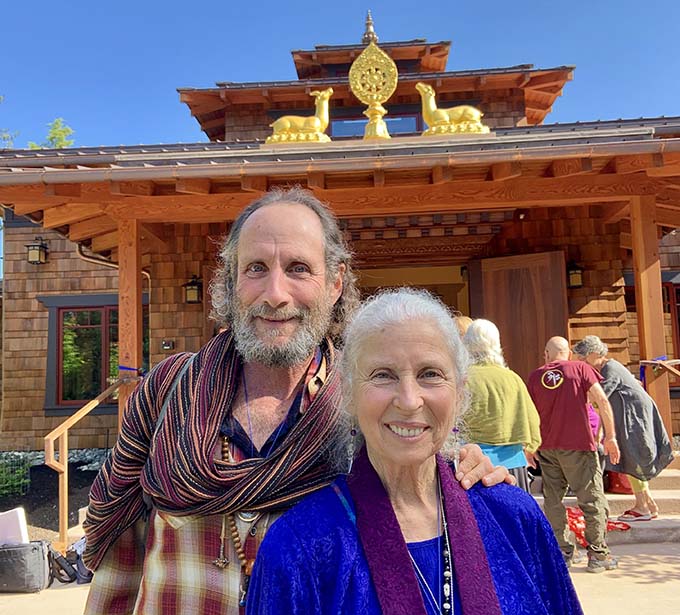
Authors Michelle and Joel Levey at the Yeshe Long Buddhist temple on Whidbey Island, northwest of Seattle.
Photos by: Bear & Company, Joel Levey, Pam Cowan
For five decades, the dharma community we serve has drawn inspiration from the Bodhisattva teachings of both peaceful and fierce compassion, guided by the wisdom of interdependence.
These teachings help us navigate the turbulence of these volatile, uncertain, complex, and ambiguous times. They have guided our activism, spiritual practice, teachings, and work in the world with a special kind of courage and care.
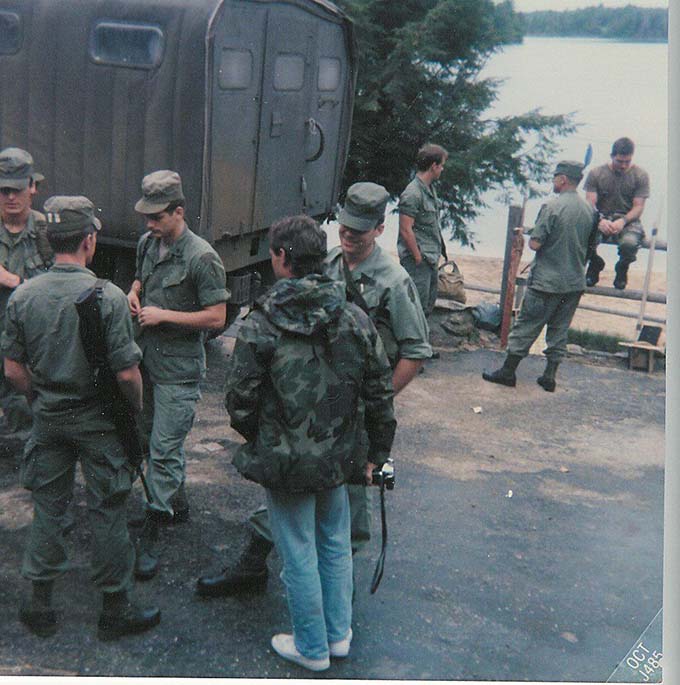
In our roles as two Buddhist peace activists, you can imagine our surprise when in 1982 we received a call out of the blue requesting us to design and deliver “the ultimate warrior training program” for the U.S. Army Green Berets.
We were blessed and challenged to have the wholehearted support and guidance of many of our dharma teachers in this work, which started in 1985 and is ending early this year, in 2026.
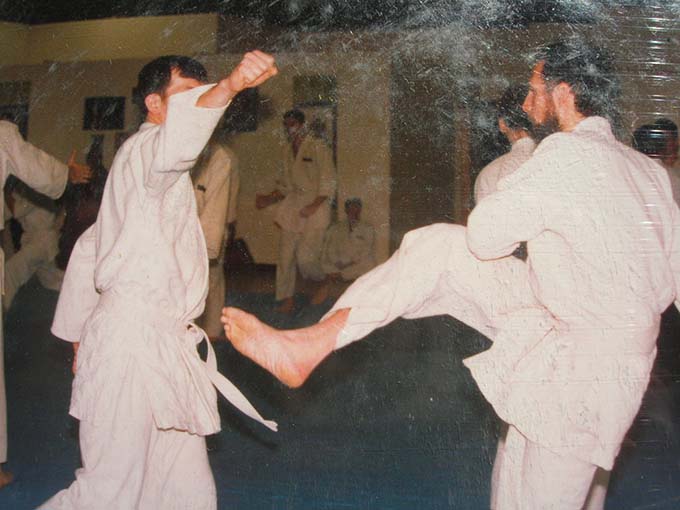
This once-secret, immersive six-month “Jedi Warrior” train-the-trainer program included a month-long silent meditation retreat, intensive training in higher performance flow states, aikido, high-tech biofeedback and neurofeedback, and inclusion of the soldiers’ families. Our primary mission was to teach these soldiers skills to recognize and befriend their inner enemies, and to stop the war inside.
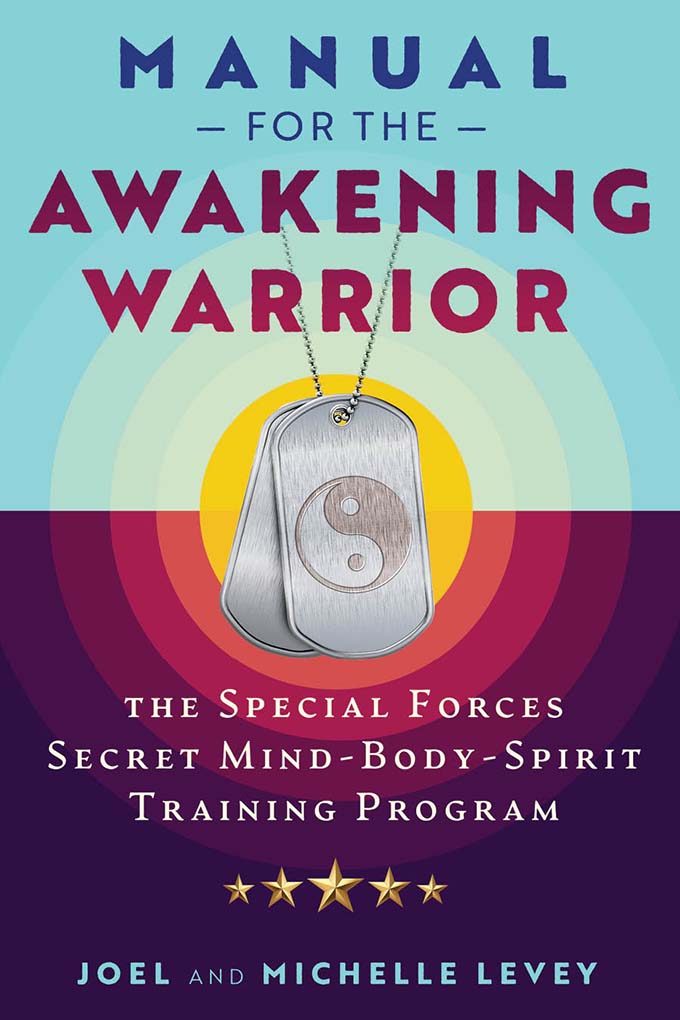
Our new book about this training, “Manual for the Awakening Warrior: The Special Forces Secret Mind-Body-Spirit Training Program”, has just been released. The book is sparking dialogue and deep reflection within dharma communities and beyond.
At its core the book illuminates the profound relevance of the Bodhisattva warrior spirit and sacred view. These call us to turn our minds toward the dharma, and toward wiser, more compassionate ways of living in perilous times of aggressive authoritarianism, climate change, genocides in Gaza and Sudan, threats of nuclear proliferation.
“Manual for the Awakening Warrior” reveals the story of this extraordinary paradigm-busting program for 25 elite special forces warriors. It offers an inspiring and in-depth view of the origin of this historic training, and illuminates its challenges, breakthroughs, and profound implications. It offers practical guidance and skillful means for anyone dedicated to awakening the needed courage, insight, empathic attunement, and compassionate responsiveness, to live wisely, resiliently, and helpfully in these times.
Light and Darkness

This historic “Jedi Warrior” program was inspired by both light and darkness. It emerged from the grief and shame of military leaders who had sent soldiers into harm’s way without adequate inner preparation. Heartbreaking data shows that from two to 16 times more veterans commit suicide than die in combat, with an average of 22 veterans committing suicide each day. Those who experience “moral injury” resulting from actions taken that violated their inner ethical compass, have tripled the suicide risk.
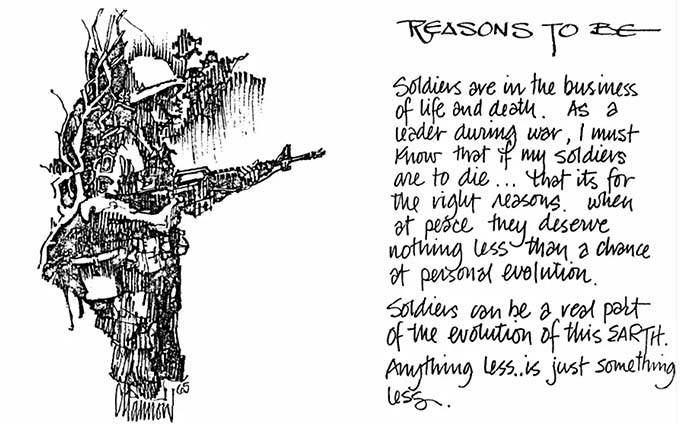
The “Jedi Warrior” approach was preceded by Lt. Col. Jim Channon’s visionary “Evolutionary Tactics: A Manual for the First Earth Battalion”. This book inspired leaders to seriously consider transforming the military into warrior-monks devoted to Earth stewardship and protection, rather than destruction.
Heart Power
The same week we were invited to create “the Ultimate Warrior Training Program,” two significant things happened.
First was the entry of the first Trident submarine into the Salish Sea north of Seattle, to be loaded with missiles carrying thousands of times the nuclear destructiveness of the bombs that devasted Hiroshima and Nagasaki. Currently 14 Trident subs lurk deep in our world’s oceans.
While dharma friends were engaged in protests and blockades, we were contemplating the merits and karma consequences of accepting the radical assignment to create the training program.
We came to the sobering realization that if we could for six months train the crew of a Trident in science-based, dharma-inspired inner disciplines, our world would likely be a safer place. This was inspired by the profound courage of Soviet Vice Admiral Vasili Arkhipov, who refused orders to fire his nuclear torpedoes during the Cuban missile crisis, thereby preventing a devastating nuclear war.
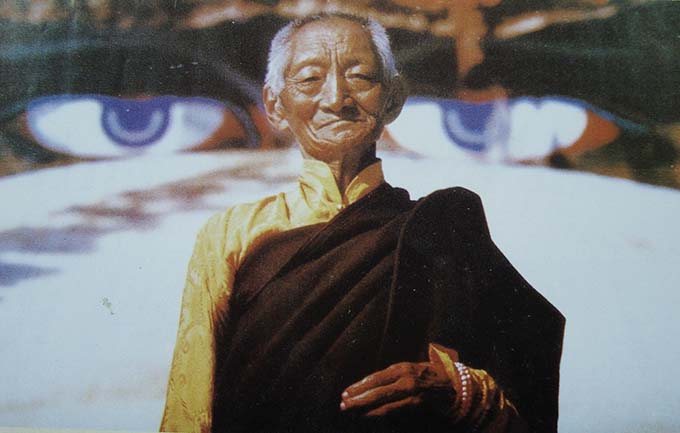
Second, we reached out to Kalu Rinpoche, a beloved mentor and Buddhist master, to seek his advice regarding accepting this project. Rinpoche’s response was disarming: “If you have the opportunity to work with people who have tremendous power but who may lack the wisdom and compassion to use that power for the greater good, and if you can move them toward greater wisdom-love, then by all means take it on.”
When we were visited months later by Zong Rinpoche, the former abbot of Ganden Monastery in Tibet, we asked him what was most important to teach these soldiers. His reply was sparse and to the heart. “Teach them courage.” This became a kind of koan for us. “How do we teach courage to elite soldiers?” Years later we discovered that the Tibetan term nyingthob, translated as courage, could also mean patience, compassion, forgiveness, or heart-power.
One of the most transformational components of Jedi Warrior program was a month-long, silent, vipassana-style retreat, called “The Encampment.” Venerable Rina Sircar and her teacher, Taungpulu Sayadaw, helped us map out the progression of teachings and practice for this retreat.
Some weeks into it, after a dharma talk and meditation on interbeing, one of the soldiers, trembling with insight, asked, “If what you are saying is really true, then… how could we ever kill anyone?”
The gravity of his words thundered through the silence and shook us to our core. Taking his question to heart, we dialogued into the night with the warriors, seeking to fathom the depths of his question.
Some days later we introduced the practice of metta, opening our hearts to emanate lovingkindness to ourselves, others, and all beings. Following that meditation and a short break, a surprising number of soldiers returned to our zendo for the optional “night-owl meditation.”
The zendo was bathed in golden lantern light and the stillness was palpable. As we dropped into the metta-field, a glint to our right drew our attention to the barrel-chested sergeant sitting with impeccable form, with his M-16 rifle on the floorboards beside his seiza bench. Glistening in the lantern light, tears streamed down his face to fall from his broad jaw onto the skull and crossbones of his black “Rangers: Death from Above” T-shirt. May all beings be peaceful… may all be safe… may all be free from sorrow and pain.
Relevance

The enduring relevance of this dharma-inspired transformational learning affirms the universality of our deep humanity and extraordinary potentials, regardless of our social status, profession, or worldview.
In these dangerous times, awakening the special kind of courageous presence necessary to find the light of insight, empathic resonance, and responsive compassion shines in stark contrast to the debilitating impacts of overwhelm, denial, despair, rage, and destruction. Such insights, experiences, and teachings have inspired the views and values of our dharma teachings for the past 50 years and now, as “Manual for the Awakening Warrior” enters the mainstream and the mind-streams of many people unlikely to seek out a zendo or temple, new portals of possibility are emerging.
Conclusion
We have recently established Bodhi Tree EcoDharma Sanctuary, a 501(c)(3) non-profit Buddhist Church. We currently offer four weekly Zoom meditations plus a weekly in-person community meditation, and new programs on “Sacred Activism” and on “Conscious Living Conscious Dying.” In 2026 we’ll offer classes in EcoDharma Wisdom from the Holy Book of Nature, and a retreat on “A Special Kind of Courage.” We plan to return to Bhutan to guide a dharma pilgrimage in the autumn of 2026.
Joel and Michelle Levey have devoted their lives to dharma practice and teaching within the Rime non-sectarian lineage of the Tibetan tradition , drawing inspiration from transmissions they’ve received from beloved Theravada, Mahayana, Vajrayana, and Dzogchen teachers. They’ve pioneered the integration of contemplative science and collective wisdom into leading medical, higher-education, organizational, governmental, and sports arenas around the globe for five decades. Joel started the first mindfulness-insight-vipassana center in Seattle in 1976.
The Dalai Lama, an advisor on several of their projects, encouraged them in a letter saying: “You are presently engaged in work that has great prospects for bringing the dharma to a very wide section of people who may not under ordinary circumstances come into contact with these teachings.”
The Leveys are advisors for the development of Gelephu, Bhutan’s new “city of mindfulness,” and served as advisors for British Parliament’s historic Mindful Nation UK report. They’ve taught at: University of Minnesota Medical School; Indian Institute of Management; Mahidol University in Thailand; Bastyr and Antioch Universities. Their published works also include: “Living in Balance: A Mindful Guide for Thriving in a Complex World”; and “Mindfulness, Meditation, and Mind Fitness”.