
Prison Volunteers Gather to Strengthen the Work
Written by: Venerable Thubten Ngawang
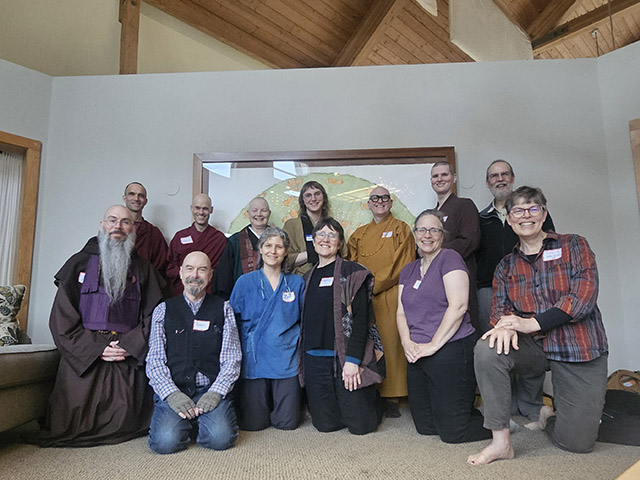
The group on the second day. Front from left; Fa Hsing Jeff Miles, John Craycraft, Zoe Darling, unnamed, Meg Critchlow, Ruth Russo. Back from left; Venerable Thubten Gyatso, Venerable Thubten Ngawang, Genko Rainwater, Daio, Yinxin Brother River, Bhikshuni Yincheng, Dennis McDermot.
Photos by: Brother River, Daio, Thubten Ngawang, Genko Rainwater
For the first time in 15 years, Buddhist practitioners volunteering in Northwest prisons came together in Seattle for a March weekend of connection and collaboration. They emerged with a renewed commitment to the work, and a refreshed sense of collaboration.
Previous gatherings had been held in 2008 and 2010. The 13 participants of the March 22-23 event serve in prisons in Washington and Oregon, and represent various Buddhist traditions including Zen and Tibetan. Co-organized by Zoe Darling and Fa Hsing Jeff Miles, the gathering was held at a co-housing community building. It featured circle sharing, practice sessions and group exercises to foster information sharing, mutual support and collective rejoicing.
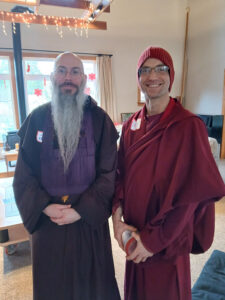
Prison work changes those incarcerated, as well those volunteering. From my own experience, I am consistently inspired by the practice of those inside prisons. Sharing space with fellow practitioners—regardless of the physical environment—seems completely natural and is always spiritually nourishing.
Fa Hsing Jeff Miles of Mountain Way Zen began with an overview of the prison system in Washington. A map showed open facilities as well as recently closed ones. There are currently 11 operating facilities in the state—nine of which have active Buddhist groups. Fa Hsing serves Stafford Creek Correctional Center (CC), Washington CC, Olympic CC and Clallam Bay CC.
Organizer Darling leads regular Buddhist groups serving those incarcerated at Monroe CC, and also organizes and facilitates daylong retreats! Several monastics from Sravasti Abbey lead a weekly class at Airway Heights CC near Spokane, and Ruth Russo and other volunteers lead groups at the Washington State Penitentiary in Walla Walla.
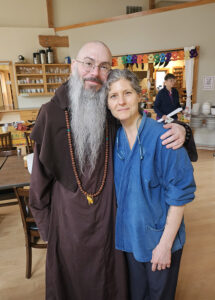
Genko Rainwater of Dharma Rain Zen Center in Portland, who serves in six prisons, gave an overview of the Oregon prison system. These facilities include Oregon State Penitentiary, Columbia River Correctional Institution (CI), Coffee Creek Correctional Facility, Eastern Oregon CI and Two Rivers CI. The map also showed the locations of those institutions Dharma Rain serves. Those are only a small portion of all the prisons in Oregon, many of which are served by other Buddhist practitioner volunteers.
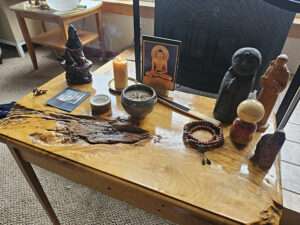
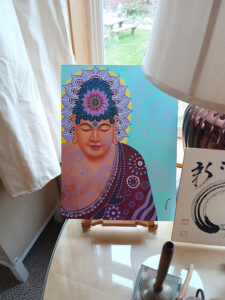
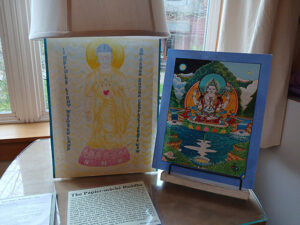
Participants’ introductions included heartwarming, profound and deeply moving stories of experiences from volunteering in prison, bringing our Buddhist groups right into the heart of our circle. Participants also brought items they placed on the shared altar, providing visual representations of what is meaningful about this work. These items included statues, malas, and even artwork painted by incarcerated people, all of which had personal significance for the volunteer who shared them.
Significant time during the gathering was dedicated to discussing practical issues of navigating Department of Corrections rules, while maintaining loving-kindness and compassion for those incarcerated and for correctional officers. Some tips for interacting with correctional officers included keeping interactions helpful, not pushing back on instruction, offering counterproposals when appropriate, and building up a good reputation over years. Volunteers aim to embody loving-kindness and compassion without developing close relationships with the incarcerated, or going beyond the legal boundaries of their service. The conversation focused on how both sponsors and participants can create the causes for change, without getting attached to any particular result.
The first day concluded with a thought-provoking Liberating Structures exercise called the “9 Whys,” blended with an insight dialogue approach to inquiry: “Why do you do this work?” The group broke up into pairs to discuss this question in detail. One person asked the question of a partner and then actively listened to the reply, with the listener then asking the question again and again, promoting deeper reflection. The full group then rejoined for a debrief and a wrap-up for the day.
The second day began with group meditation in silence as the sun came up. This was a beautiful and gentle way to ease into the final day of the gathering. As the sharing session began, various questions and issues were posed by each member of the group for continued conversation. Topics included how to effectively facilitate Buddhist groups, and class formats. Group members also acknowledged that our gathering was an all-white gathering of the convert Buddhist community, with no representatives of the born or ethnic Buddhist community. We acknowledged that influence, as we navigate the cultural and racial diversity of incarcerated Buddhist groups.
In addition group agreements were discussed, along with ideas for specific content that has been useful for incarcerated people. These relevant Buddhist concepts and practices included purification of negative karma through the four opponent powers of regret, reliance, remedy and resolve. We also discussed sharing stories of the radical transformation of historical Buddhist figures such as Milarepa and Angulimala, who awakened despite committing murder in their lifetimes, to inspire change.
Embodied practices help us utilize our bodies to support our mental development. Various breathing exercises were demonstrated including rectangular breathing and square breathing. “Laughter yoga” was introduced, as an unconventional but effective way of bringing relaxation and play into an otherwise tense and serious atmosphere. The mandala offering in Tibetan Buddha includes a hand mudra that symbolizes offering the entire universe to the Buddhas, as a way to increase our generosity and open our hearts to receive inspiration. “Moving Buddha” is a seated moving meditation used to calm the body and mind, by becoming mindful of each individual movement. There was discussion of Qi Gong and yoga as well.
Useful takeaways from the discussion included the value of creating safe spaces, the purpose of repeating key Buddhist ideas, and speaking about what we know. We explored alternating formats to allow for a mix of voices to be heard, creating opportunities for the emergence of the wisdom of those incarcerated, and changing group dynamics by introducing smaller subgroups. One especially important point was how Buddhist volunteers can be a force for gradual change, by embodying metta for the incarcerated and correctional officers alike.
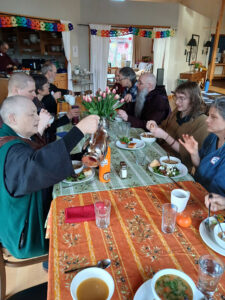
By the end of the gathering, there was a palpable and renewed enthusiasm for this meaningful work of sharing the dharma “on the inside.” Collective rejoicing and gratitude will fuel us for a long time to come. Knowing that we are not alone in this work, but how many others around the Northwest are engaged in it as well, will be a continuous source of inspiration for us.
The group has already begun to exchange detailed schedules and service liturgies, as well as invites to the Buddha Day celebrations scheduled for more than half the facilities in Washington. These are special events which include food, dharma talks, meditation and various dharma activities, designed to bring incarcerated individuals, their families and volunteers together for a day of spiritual connection.
I rejoice in the incarcerated individuals who show up weekly, to come together in spiritual community. They speak about serving as role models for others inside, remaining equanimous amidst family drama, and gradually transforming into the kind of human beings they want to become. To have the opportunity to support and witness those transformations, is a privilege this group shares.
For more information about Sravasti Abbey’s prison project, please write to prison-project@sravastiabbey.org. For those in the Seattle area interested in volunteering at Monroe CC, Darling may be reached at healing@zoeadarling.com. For those on or around the Olympic Peninsula, who want to volunteer at prisons located there, reach out to Fa Hsing at mountainwayzen@yahoo.com.
If you appreciate our work, consider a donation.
Venerable Thubten Ngawang is a novice monk at Sravasti Abbey, a Buddhist monastery in Tibetan tradition north of Spokane. Ordained in 2022, he serves in a range of roles at the abbey including retreat manager and offering service coordinator. As part of the abbey’s prison project, he writes to incarcerated individuals around the country, sends dharma materials, and co-leads a weekly Buddhist class at Airway Heights Correctional Center.