
New Book ‘The Dharma of Healing’:
The Path of Liberation from Stress, Pain, Trauma
Written by: Justin Michelson
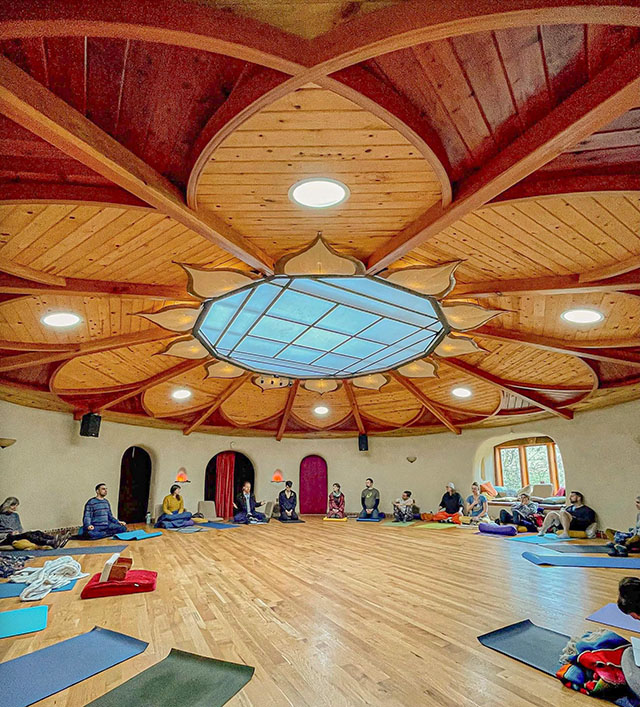
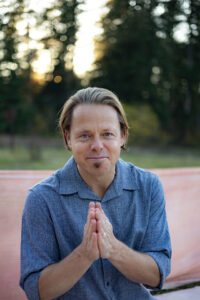
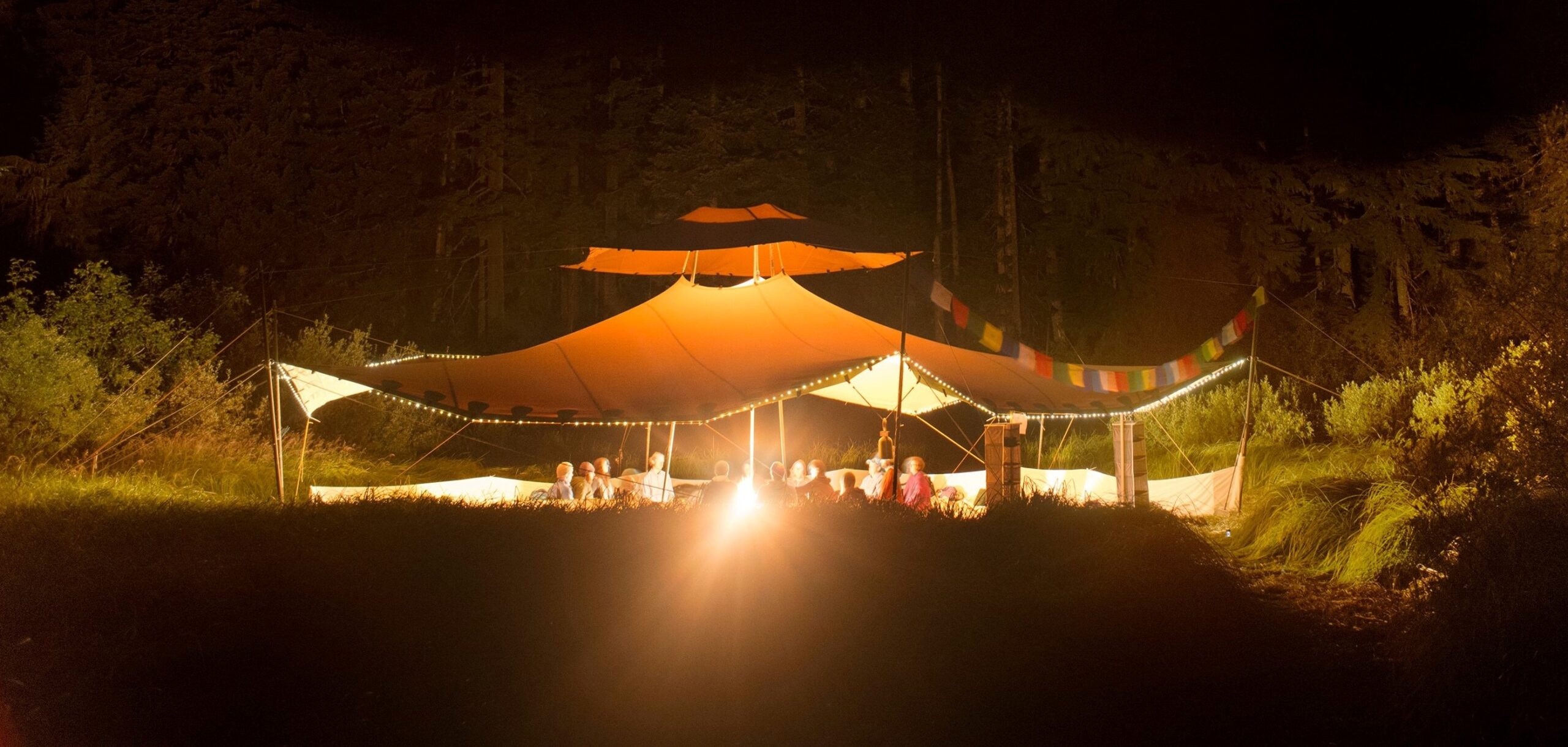
Justin Michelson teaching at 2024 Dharma of Healing Retreat at Mandala Sanctuary in Eugene, Oregon.
Photos by: Mikayla Media, Paul Reeding, Shambhala Publications
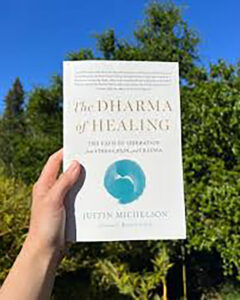
In my new book “The Dharma of Healing,” I describe a system of spiritual practice for the modern seeker. Through a series of fresh perspectives, principles, and practices, the book repositions psychological healing as central to both spiritual development and maturation, as well as to effective engagement in the world.
Synergizing the liberating wisdom of insight meditation with the therapeutic power of self-compassion, the book offers a pathway of practice rooted in an ancient and proven wisdom tradition that can bear fruit within our modern minds and lives. This synergy of spirituality, healing, and engagement naturally emerged, from the evolution of my own personal journey.
This book is the beginning of an ever-deepening answer to the core inquiries I painstakingly pursued since my early twenties. I found that I couldn’t leave this world behind when it needed so much, but I couldn’t leave my devotion to awakening either. So I had to know: What was the meeting place of spirituality, healing, and activism? How could I awaken within an active life of service in this chaotic world?
Many years later, this book is an answer to those early questions—ultimately proposing a unified theory, practice, and path to realization, based in true compassion.
For those Westerners already immersed in the dharma, I propose what may be a significant shift in focus: the fundamental importance of thorough psychological healing, to the progression of the spiritual path. A spiritual journey without healing will likely remain disconnected and conflictual, even if only at a subtle level of mind.
To remedy this, I place engaged heart practices and compassionate self-inquiry as a prerequisite for—and an ongoing companion to – traditional wisdom or concentration practices. The healing they bring activates and integrates the wisdom we seek. Along the way, I work to reconcile numerous paradoxes, including that between the personal healing of the self. and the deeper liberating truths of impermanence and not-self.
For those arriving from a secular or psychological background, I offer the often-missing spiritual depth that can alchemize and awaken modern Western psychological approaches. Healing will always feel incomplete unless it includes a radical reconnection to something far greater than ourselves. Or to put it another way: understanding the true nature of our suffering is just as important as healing it. Hence, a healing journey without the spiritual dimension will likely remain confining, and ultimately not entirely satisfying.
To remedy this, I elevate and expand the healing capacities of the human heart out of the merely personal, and place them within a larger expression of collective and universal unfolding. Doing so, I point toward the more profound spiritual purpose of healing, and propose a meditative framework through which to experience it.
For those arriving from the front lines of activism, I suggest a renewed devotion to the self-focused practices that create a foundation for sustainable engagement. A life of service without a solid foundation in healing and spirituality will likely lose its purity of intention and thus its effectiveness, not to mention the courage, energy, and wisdom needed to persevere. It’s all too easy to act from our unresolved fear and judgment, taking sides and increasing division instead of transforming into the more compassionate and wise beings that the world dearly needs.
To remedy this I describe a radical practice of activism that flows forth as an outpouring of a full and nourished heart—one that can liberate ourselves and others in the process.

Finding the meeting place between emotional healing, spiritual insight, and engagement was an inquiry I had held for decades, more or less consciously. I had been a sensitive young adult, keenly curious about the natural world, distrusting of ways I saw societies perpetuate harm.
After having the great fortune of being introduced to the dharma at age 15, it didn’t take much observation of the world to see that the root of the crises I saw around me were within each of us. If we could change the way we perceived and related to ourselves, we could transform the suffering into grace. Of course, I had to test this theory myself first. And I’ll be the first to admit – the work was was a lot harder than I had thought it would be.
From high school onward, I followed the dharma trail through Insight meditation, Zen, and Tibetan doorways. I engaged in sustainability education and non-profit management. And despite myself, at about the age of 28 I found myself sitting in a therapist’s office, trying to figure out my own emotional life.
My eventual discovery was that my unhealed psychological wounds blocked my capacity to access and sustain the spiritual insights that the dharma had revealed. I would apply my spiritual stories and insights to the pain, but lo and behold, my pain didn’t need enlightenment – it needed heartfelt care. It needed love! And the world with all its problems I was so intent on solving didn’t need my anxious desperation to fix it – it actually just needed the same love.
So I had to reorient myself around a self-compassion practice that combined my meditative experiences, my new therapeutic discoveries, and my need to help others. This book is for everyone, of course, but I realize now I wrote it mostly for me.
A little bit about our sangha, where all are welcome. Eugene Insight Meditation Community offers weekly online meetings as well as in-person retreats. A group of sincere practitioners gather every Sunday night to hear the dharma and if so inclined, to share their understanding and experiences with those who love to listen and provide support.
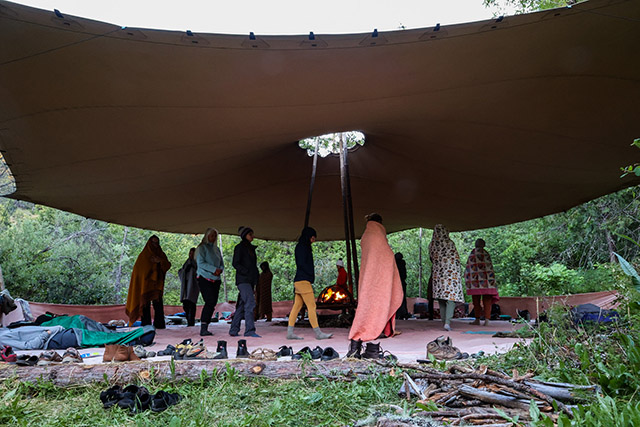
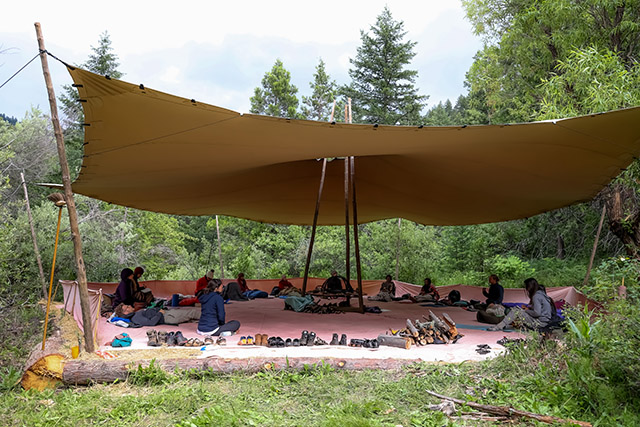
Leading retreats is a passion of mine. We offer 1.5-day self-compassion retreats which consist of guided meditations, gentle yoga, walking meditation periods, dharma talks, individual interviews, and delicious organic meals. There are also four to 11-day wilderness retreats in Oregon, which include afternoon hikes as well.
These retreats combine the healing effects of being in nature, along with the silence necessary for deep practice. The company of others seeking insight while in the beauty of the woods, seems to create a unique learning environment. If you are interested, please find out more at naturesheart.net or justinmichelsondharma.com, or email me at eugeneinsight@gmail.com.
If you appreciate our work, consider a donation.
Justin Michelson is a teacher in the insight meditation tradition, with over 20 years of training at centers such as Spirit Rock Meditation Center, Insight Meditation Society, Vipassana Metta Foundation, and Cloud Mountain Retreat Center. His root teacher is Rodney Smith, founder of Seattle Insight Meditation Society. Michelson co-founded Eugene Insight Meditation Center in Eugene, Oregon, and is now lead teacher.